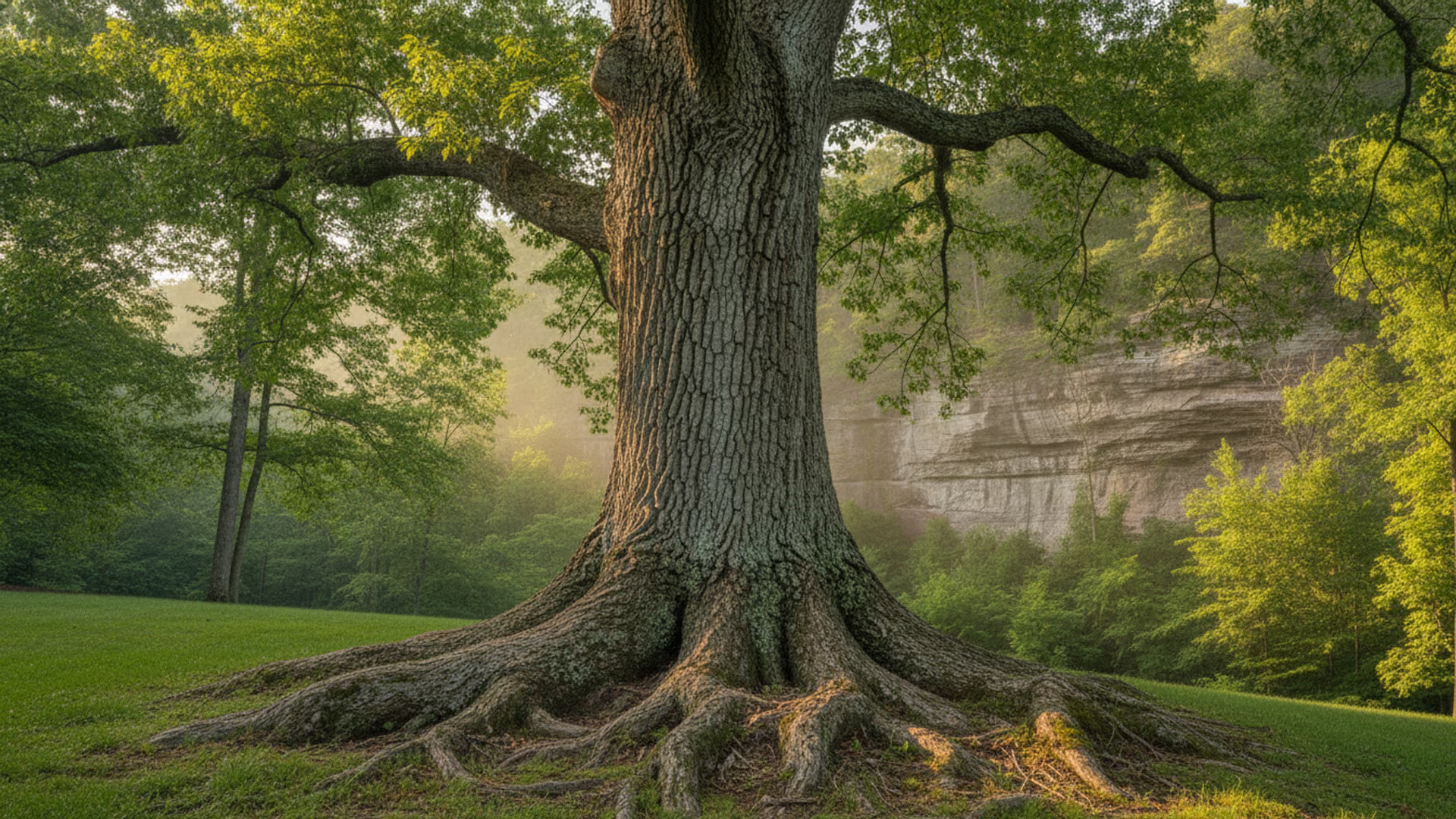
An arborist in Logan, OH can tell you whether a struggling tree is worth saving before anyone quotes you a removal. The maple leafed out thin this spring. The ash at the end of the driveway didn't leaf out at all. The hemlock behind the cabin has been going gray for two summers. If you're typing "is my tree dying" into your phone at the kitchen window, what you actually need — before anyone quotes you a removal — is an experienced set of eyes and a straight answer. That's what a professional tree health assessment in Logan is for. Reliable Tree Service has worked on Hocking County trees since 2015 — roughly 5,000 projects' worth of learning what a dying tree looks like versus a stressed one that will recover. We're bonded and insured, and you can reach us at (740) 216-8262.
Signs a Tree Is in Trouble
Trees rarely die overnight. They telegraph — and these are the signals worth a phone call:
- No leaves, or a thin crown. A tree that skipped leaf-out, or leafed out on only some limbs, is showing you where the damage is. One bare scaffold branch often traces back to root injury or a canker on that side of the trunk.
- Bark falling off tree trunks in sheets. Sloughing bark usually means the tissue underneath is already dead. On ash in this county, look for the blonde patches where woodpeckers have flaked the outer bark — and the D-shaped exit holes underneath, the signature of emerald ash borer.
- Mushrooms at base of tree. Shelf fungus or mushrooms at the root flare aren't a lawn problem. They fruit from wood that has already decayed, and decay at the base is the failure point that puts whole trees on the ground. Mushrooms at the base mean advanced decay — treat them as a red flag, not a curiosity.
- Deadwood, dieback, and lean. Dead limbs in the upper crown, heavy woodpecker activity (they're hunting borers), a new lean, or cracked and mounded soil at the base after a windstorm all say the same thing: this tree needs attention now.
Any one of these is worth a look. Two or more, and it's time to stop parking under the tree, keep the kids out from under it, and call.
What a Tree Health Assessment Covers
No gimmicks — a thorough visit, start to finish:
- A walk-through with you. We hear the history first: when it started, what changed, whether the yard was regraded or trenched near the roots.
- A full inspection. Crown (dieback pattern, deadwood, broken hangers), trunk (cracks, cankers, borer holes, bark loss), and root flare (fungus, girdling roots, soil heave, soft decayed wood).
- Written findings. What's wrong, how far along it is, and what's sitting under the tree if it fails.
- A clear recommendation. Trim it, remove it, or watch it — with no pressure toward the expensive option.
When your concern is a specific target — the white oak over the cabin, the silver maple over the driveway, the limb over the power drop — the same visit becomes a tree risk assessment: how likely is failure, and what does it hit. An assessment starts with a phone call and a walk in the yard, and ends with a straight answer in writing.
The Two Killers in the Hocking Hills: Dead Ash and Dying Hemlocks
Hocking County sits inside Ohio's emerald ash borer quarantine, and most of the damage is already done: the white and green ash are largely dead, standing as gray skeletons along driveways, fence lines, and cabin lots. For ash, the assessment question usually isn't "is it dying" — it's "how dangerous is it right now." EAB-killed ash turns brittle fast and sheds its top unpredictably, which makes standing dead ash some of the riskiest work in the trade the longer it waits. An assessment sorts out which dead ash can stand another season and which one over a target needs tree removal before the next ice load settles the question.
The hemlocks have their own problem: hemlock woolly adelgid — the tiny woolly white dots on the underside of hemlock twigs. Since it was first found at Cantwell Cliffs, HWA has spread into nearly every significant hemlock stand in the Hocking Hills, and ODNR is actively treating trees in the state park and forest. On private land — the hemlocks shading gorges, cabins, and hot tubs from Rockbridge to South Bloomingville — nobody is checking unless the owner asks. A graying, thinning hemlock over a structure deserves a look before winter ice load tests it. We assess and document; where chemical treatment makes sense, that's specialized pesticide-applicator work, and we'll tell you honestly when it's worth pursuing rather than pretending it's ours to sell.
Trim It, Remove It, or Watch It
Every assessment ends in one of three recommendations:
- Trim it. If the problem is deadwood, storm damage, or a structural issue a proper cut can correct, tree trimming and pruning removes the hazard and keeps the tree.
- Remove it. Advanced decay at the base — those mushrooms — a mostly dead crown, a dead ash over a target, or a new lean with root-plate movement: some trees are past saving, and pretending otherwise just moves the cost to an insurance claim. When that's the honest call, we'll quote the removal on the spot.
- Watch it. Plenty of stressed trees just need water, time, and a re-check next season. We'll say so. An assessment that ends in "leave it alone" is still a good assessment.
We make our living on the work, but we'd rather tell you the truth than sell you a removal you don't need.
Hazard Documentation for Cabin Owners and Insurance
The Logan–Hocking Hills market has more than 1,100 active vacation rentals, and nearly every one of them has mature trees standing over guests, decks, and hot tubs. Written assessment findings give cabin and short-term-rental owners dated documentation that a tree was evaluated — useful in insurance conversations, guest-safety diligence, and deciding which trees to budget for between bookings. We work with major insurance providers, and when a claim happens, the difference between a documented pre-existing hazard and sudden storm damage matters. And if a tree has already failed or is hanging over the roof right now, that's not an assessment call — that's 24/7 support and emergency tree removal.
Serving Logan and the Hocking Hills
We're based on W Hunter St in Logan and work throughout Hocking County and the surrounding hills — cabin country around Rockbridge and South Bloomingville, out to New Straitsville and Sugar Grove. Reliable Tree Service has been at this for 11 years: roughly 5,000 projects completed, bonded and insured, a written estimate on every job. If a tree on your place has you looking up and wondering, request an estimate or call (740) 216-8262 — you'll get a straight answer either way.